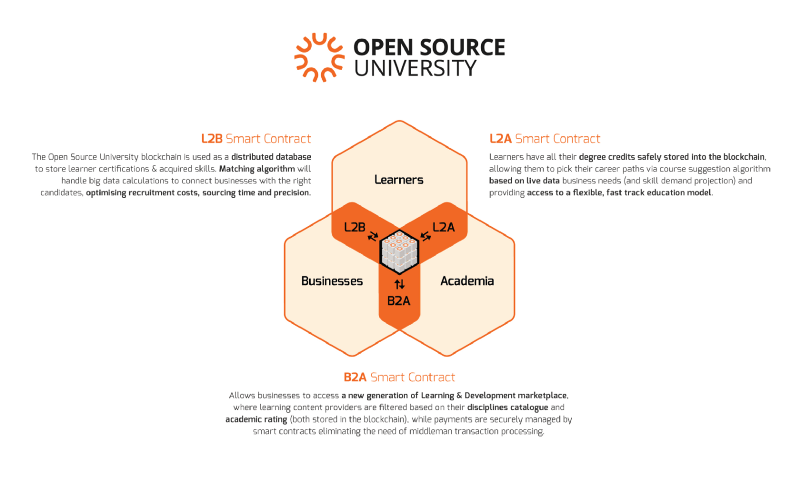
After the positive reviews and the expansion of its partnership network in 2016 (under programs for entrepreneurial support, led by the Ministry of Economy and the Open Society Institute, as well as through the Sofia Business School global masterclasses) 2017 proved to be an extremely successful year for the Open Source University R&D project that was kicked-off back in 2015 by members of the Brain Workshop Institute.
The Future is here – it’s just not very evenly distributed, William Gibson once wrote. Hence, you need to know where and when to look in order to connect the dots and see the broader futuristic-turned-realistic picture. There were a few such opportunities for me to look into over the past year.
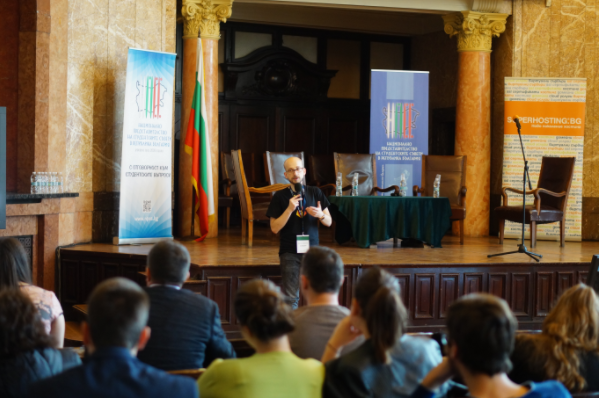
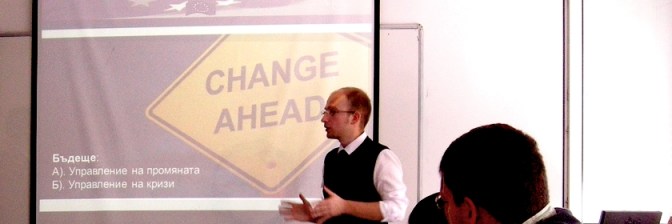
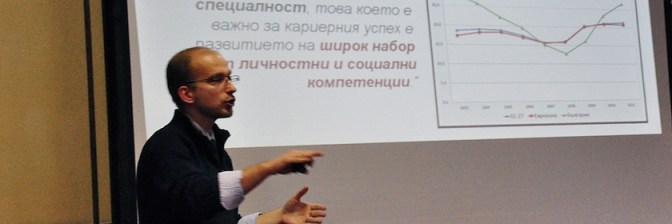
Speaking at a workshop on creating the next generation of EU leaders, who will need to deal with the crisis, created by the previous one due to lack of change management skills and knowledge.
In 2012, an essay of mine won me two highly appreciated recognitions. One came from the first edition of Sofia Business School’s Master Classes on Global Economic and Financial Risks – Best Working Paper Award, and a scholarship for the annual Von Mises conference, organized by the pro-market Istituto Bruno Leoni. And the other coming from the ALDE (to which i have no affiliation and never had, which only makes it more special) – a pan-European scholarship contest and an opportunity to take part in a leadership academy on the subject of the future of the EU.
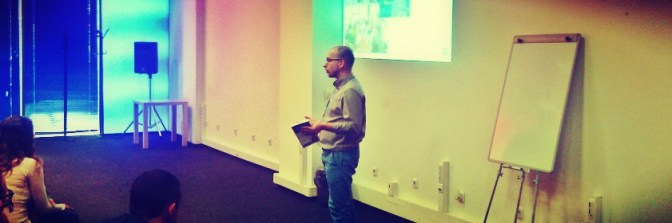
Getting invited to speak at the monthly coffee talk of HP’s Business Support Services team in Sofia was a great honor for me. Especially having to open the floor for a new initiative, called “Ideas Worth Sharing”, intended to spread motivating and engaging personal stories among the employee community of the Sofia based HP BSS team.
My participation was provoked by a recent article of HP’s GBS magazine where my book on Stakeholder Management was spotlighted among other employee-related success stories as part of the “In Pursuit of Your Passion” campaign.
This article is about the problems. If you are more of a solution-oriented person, check this interview directly.
Universities fail for the exact same reasons that led to the financial collapse of 2008 – they (just as the banks did) forgot what they were designed to do. And opposite to the modern-day banking, university education can be far more easily substituted.
OK, I wound not start with the banking comparison – obviously it would be wiser to keep it for later on, as it is a sensitive argument, indeed, and provoking one. So let’s take an alternative approach to explain where we currently stand with university education, and what we should expect by discussing why did the housing market in the U.S. basically turned into bubble, and eventually went bust, along with the banking system inflating it – the primary cause of the 2007–2009 recession. It’s simple – it ended up this way, because it broke its linkage with the common sense of doing business in an entrepreneurial economy, turning itself into a deceptive, but yet not-so-clever instrumental bundle of service to the hedge funds, investment banks schemes and products, you name it… Remaining without any meaningful purpose on the outside, and especially in regards to the housing demand & supply logic, to start with.
A moment from the training at HP – great audience, some screen issues, and a topic to build on
Mid July 2014 I hosted an introductory training on the topic of Stakeholder Management in Agile Environment for Hewlett-Packard Young Employee Network (YEN).
The training took place in Global Delivery Sofia Center, and was part of a full-day seminar, organized by YEN and Brain Workshop Institute, on the topic of Effective Decision Making.